
CLS
DevOps Engineer

DevOps Engineer

Total Duration 140 Hours
Level Beginner / Intermediate
Available Schedules
Book your Seat Now

Prerequisites

Prior experience in programming or IT
Fundamental knowledge of networking concepts
Basic command-line usage and Linux exposure

Course Outline

This isn't just a course. It's a structured path designed to turn you into a specialist ready for the global job market.

Target Audience

Designed to meet the needs of learners at different career stages, empowering them to build user-centered digital experiences

DevOps Engineer – Develops CI/CD pipelines
Cloud Infrastructure Engineer – Designs and operates cloud infrastructures on multiple platform such as AWS, Azure, and Google Cloud
Automation Engineer – Uses configuration management and infrastructure as code technologies such as Ansible and Terraform
Learning outcomes

What you'll learn

understanding of DevOps and the modern DevOps toolsets.
Understand the concepts of continuous inspection, continuous integration, and continuous deployment, and the difference between them.
Containerize a web-based application with a microservice approach and automate it using Docker file.
Create a multi-stage Jenkins job and visualize the complicated build pipeline with Jenkins build pipeline plugin.
Create and manage repositories on GitHub.
Manage project defects or enhancement requests with GitHub Issues
Understand DevOps Ecosystem
Learn about automatic Source Code Management using GIT and Continuous Integration using Jenkins.
Understand, Build and Test Automation: how to build an appropriate delivery pipeline and perform test automation on it.
Understand Containerization using Docker: identify the difference between containers and VMs Master
Docker Commands and Use-cases deals with the various networking concepts in Docker, the best way to use the Docker Volume, and creating Docker files.
Learn Kubernetes: you can learn about Kubernetes architecture, learn more about how K8s manage containers through orchestration.
Ansible: learn Configuration management and "Infrastructure-as-Code".
Learn Continuous Monitoring using Nagios: integrate Jenkins, Docker and ansible, and learn about system monitoring using Nagios and its components.
Bash shell scripts allow you to automate just about any task on a Linux system. They combine the power of all the Linux userland utilities with a powerful scripting language.
About this course

About this course

This DevOps training Course would enable you to grasp the concepts of how DevOps transformation can help focus on value and streamline delivery and also learn about the common infrastructure servers, scalability, and availability.

You’ll Learn in this DevOps Training Course the principles of continuous development and deployment, automation of configuration management, inter-team collaboration and IT service agility, using modern DevOps tools such as Git, Docker, Jenkins, Kubernetes, Ansible.

This DevOps Training course covers several topics which are considered vital for the fundamental understanding of the domain.

It is designed to cover the intrinsic segments as well, such as the history of DevOps, objectives, software development life cycle, virtual development, and management tools.

This DevOps Training course embraces the growth objectives of IT professionals, making them proficient at tackling the architecture and scalability of software deployment.
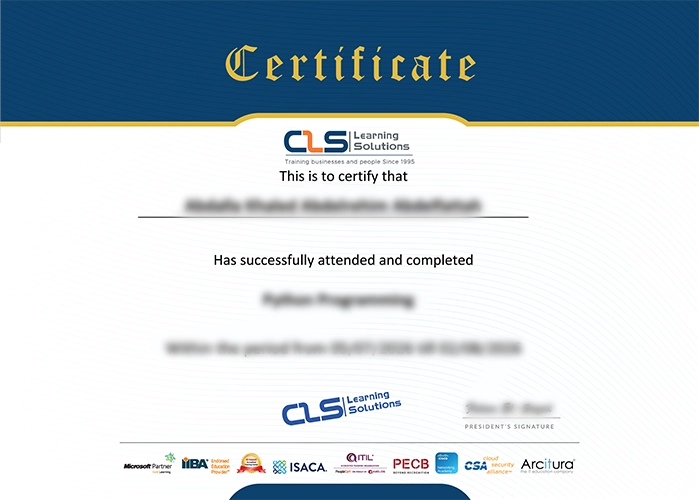

Accredited Credentials

  • Attendance Certificate from CLS Learning Solutions 
DevOps Engineer

Potential Career Paths

Technical Support Engineer
DevOps Engineer
Cloud Engineer
Cloud Solutions Architect
Software Developers
Linux System Administrator