
CLS
Cybersecurity

CISSP Information System Security Professional

The CISSP is a globally recognized standard in information security, encompassing security and risk management, asset security and software development security.

Total Duration
40 Hours
Level
Intermediate
Category
Cybersecurity
Partner
ISC2
About this course

About this course

The CISSP Certification Training course prepares you as an IT security expert holistic technical and organizational knowledge as well as experience in relation to the design, the conception, and the planning of organization-internal security requirements.

This CISSP Certification Training course is designed for information security professionals with deep technical and managerial knowledge and experience to effectively design, engineer and manage the overall security posture of an organization.
Target Audience

IT Security Professionals who want to strengthen their knowledge of enterprise information security.
Security Engineers who want to enhance their skills in security architecture and network security
Security Managers who aim to improve their capabilities in security governance, risk management and security operations.
IT Risk Professionals who want to develop their expertise in security risk assessment and management.
Security Architects who want to advance their skills in secure architecture, engineering and security design
IT Auditors who want to improve their skills in security assessment, testing and compliance.

Prerequisites

Have a minimum 5 years of cumulative paid full-time work experience in two or more of the 8 domains of the (ISC)² CISSP Common Body of Knowledge

Course Outline

  • Understand, adhere to, and Promote Professional Ethics
  • Understand and Apply Security Concepts
  • Evaluate and Apply Security Governance Principles
  • Legal and Regulatory Issues that Pertain to Information Security in a Global Context
  • Requirements for Investigation Types (i.e., Administrative, Criminal, Civil, Regulatory, Industry Standards)
  • Develop, Document, and Implement Security Policy, Standards, Procedures, and Guidelines
  • Identify, Analyze, and Priorities Business Continuity (BC) Requirements
  • Contribute to and Enforce Personnel Security Policies and Procedures
  • Understand and Apply Risk Management Concepts
  • Understand and Apply Threat Modeling Concepts and Methodologies
  • Apply Supply Chain Risk Management (SCRM) Concepts
  • Establish and Maintain a Security Awareness, Education, and Training Program
  • Identify and Classify Information and Assets
  • Establish Information and Asset Handling Requirements
  • Provision Information and Assets Securely
  • Manage Data Lifecycle (e.g., EOL and EOS)
  • Ensure Appropriate Asset Retention
  • Determine Data Security Controls and Compliance Requirements
  • Research, Implement and Manage Engineering Processes Using Secure Design Principles
  • Understand the Fundamental Concepts of Security Models
  • Select Controls Based Upon Systems Security Requirements
  • Understand Security Capabilities of Information Systems
  • Assess And Mitigate the Vulnerabilities of Security Architectures, Designs, and Solution Elements
  • Select and Determine Cryptographic Solutions
  • Understand Methods of Cryptanalytic Attacks
  • Apply Security Principles to Site and Facility Design
  • Design Site and Facility Security Controls
  • Manage the information system lifecycle
  • Apply Secure Design Principles in Network Architectures
  • Secure Network Components
  • Implement Secure Communication Channels According to Design
  • Control Physical and Logical Access to Assets
  • Design Identification and Authentication Strategy
  • Integrate Identity as a Third-Party Service
  • Implement and Manage Authorization Mechanisms
  • Manage the Identity and Access Provisioning Lifecycle
  • Implement Authentication Systems
  • Design and Validate Assessment, Test, and Audit Strategies
  • Conduct Security Control Testing
  • Collect Security Process Data
  • Analyze Test Output and Generate Report
  • Conduct or Facilitate Security Audits
  • Understand and Comply with Investigations
  • Conduct Logging and Monitoring Activities
  • Perform Configuration Management
  • Apply Resource Protection
  • Conduct Incident Management
  • Operate and Maintain Detective and Preventative Measures
  • Implement and Support Patch and Vulnerability Management
  • Participate in Change Management Processes
  • Implement Recovery Strategies
  • Implement Disaster Recovery Processes
  • Test Disaster Recovery Plans
  • Participate in Business Continuity (BC) Planning and Exercises
  • Implement and Manage Physical Security
  • Address Personnel Safety and Security Concerns
  • Understand and Integrate Security in the Software Development Life Cycle (SDLC)
  • Identify and Apply Security Controls in Software Development Ecosystems
  • Assess the Effectiveness of Software Security
  • Assess Security Impact of Acquired Software
  • Define and Apply Secure Coding Guidelines and Standards
Learning outcomes

What you'll learn

Security and risk management, asset security and communication and network security
Become skilled in security engineering, identity and access management and security assessment and testing
knowledge about the legal, ethical and regulatory considerations regarding information security
Plan and manage security policies, standards, procedures and guidelines
Learn to classify and protect information and assets appropriately
Perform security control testing and risk assessments and audits
Develop a strong understanding of security architecture and design principles

Skills you'll learn

12 skills
Security Risk Management
Supply Chain Security
Network Security
Security Governance
Identity Management
Security Auditing
Control Assessment
Security Monitoring
Change Management
Software Security

Certificate

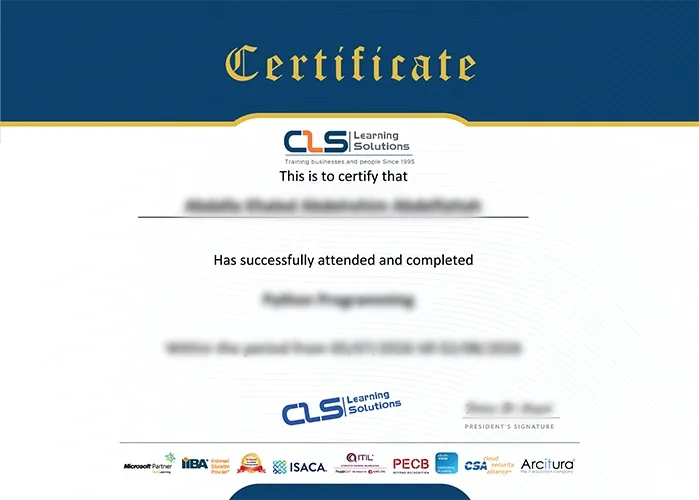
  • Attendance Certificate from CLS Learning Solutions
  • This course enables you to pass CISSP Information System Security Professional Exam  
CISSP Information System Security Professional

Potential Career Paths

Information Security Professionals
Security Consultants
Security Managers
Security Analysts
Risk Management Specialists
Network Architects